
Stay up to date on news, events and special features.
Reflecting on Student Reflections: Inquiry Insights from Teacher Education Students
By Wendy Traas and Yvonne Dawydiak
Education Librarians were impressed by the quality of responses from students in the Unlock Library Literacy workshops in LLED 350 and LLED 360. As part of the learning activities during the workshops, teacher education students were asked to consider what questions they had about incorporating digital technology into the classroom, and how to integrate Indigenous perspectives and principles. Especially considering they were in the first few weeks of the teacher education program, the thoughtfulness demonstrated by students in response to these questions was noteworthy.
Many responses to these questions would make for great inquiry questions to explore throughout the year so we are sharing them with you here. We teamed up with Yvonne Dawydiak to think about how to move some of this learning forward. In this post we describe some of the feedback students submitted, and point to opportunities and resources to support further inquiry on the topics.
Digital Technology Integration
Working in small groups, students were asked to consider the following question as part of the Coding and Computational Thinking station:
What questions do you have about working with digital technology in the classroom?
Responses to this prompt included practical considerations of accessing and managing digital technology in the classroom, designing cross curricular connections, ensuring equitable access to technology, finding educator resources and strategies to improve knowledge of computational thinking, and how to balance engagement with distraction. A selection of student responses are listed below:
- How can we keep students on task and not distracted by the really cool digital technology that facilitates the learning?
- How would we integrate an activity like coding into an ELA classroom?
- How do we make these kinds of learning opportunities more accessible for lower income school districts?
- How do we choose what tech to invest in within budget limitations?
- How do you incorporate full class participation when you only have access to limited devices?
- How do we find balance between being a part of the digital world and not let it take over?
- How to teach kids to be digitally literate and safe online?
- How do we teach healthy relationships with an reliance on technology?
- What are some adaptations for visually impaired students?
- How do you work with a technology you’ve never used before? What resources do teachers use to keep up with technological advances?
- From what age is it appropriate to introduce digital technology?
Further Learning Opportunities
Teacher Candidates will find information to support some of the above questions on the Scarfe Digital Sandbox. Resource posts include information about Assistive technologies, teaching digital citizenship, coding, multimedia creation and much more. Blog posts are more comprehensive descriptions of pedagogical approaches that might integrate digital technologies to support authentic learning opportunities. https://scarfedigitalsandbox.teach.educ.ubc.ca/
In addition to this online resource, Teacher Candidates are invited to bring their questions and ideas to some drop-in opportunities this year:
Scarfe Tea Party:
Mondays, 4:00-5:30 in Scarfe 155, Education Library
Please RSVP https://scarfedigitalsandbox.teach.educ.ubc.ca/events/event/scarfe-tea-party/
- Create, Make Innovate: hands on STEAM activities
Every Tuesday this Fall, 12:00 – 1:00 in the Scarfe Foyer - Drop in learning design: Scarfe Sandbox Support.
Weekly topics include coding, making, multimedia creation, lesson planning foundations, hooks and activating prior knowledge
Every Wednesday this Fall, 11:00 – 1:30 in Scarfe 1007
These events are hosted by Yvonne Dawydiak, Learning Design Manager, Teacher Education and are intended to allow opportunities for TCs to have hands on experiences to develop their understandings as well as providing time for TCs to bring their questions about any aspect of planning and preparation during their BEd year.
Another excellent Canadian source of information about digital citizenship including helping your students grapple with many of the weighty questions we saw in the Teacher Candidate’s responses to our question, can be found on the MediaSmarts website: http://mediasmarts.ca/
Incorporating Indigenous Perspectives
Working in small groups, students were asked to consider the following question as part of the Critical Literacy and Indigenous Perspectives station:
What questions do you have about selecting and integrating Indigenous perspectives and principles into the classroom?
Students raised questions about how to determine authenticity in texts, how non-Indigenous educators can respectfully teach Indigenous ways of knowing, finding local resources and information, designing appropriate activities, interdisciplinary connections, understanding protocols around knowledge sharing, and finding age-appropriate ways to engage with the legacy of colonization in Canada. A selection of student responses are listed below:
- What are some ways we can ensure that the material we are selecting is authentic and appropriate? How can we ensure authenticity and avoid cultural appropriation?
- How do I know when I’ve selected the right piece of literature?
- What avenues are there for finding Indigenous voices in youth literature?
- As non Indigenous educators, how can we be sure that Indigenous resources that we want to use in class is authentic and true? How do we approach this without overstepping boundaries?
- How do we navigate such a politically charged subject and teach the principles respectfully, but with confidence?
- Is it worth sharing cultural appropriation texts as a way to educate students about Indigenous people and colonization?
- How can we be inclusive of the multiple identities that fall under the Indigenous umbrella term? How can we connect learners to their own ancestry?
- How do we connect with the nation whose land we’re taching on and what are the protocols?
- What consultation should we do if we want to do Indigenous projects in our classrooms?
- Are there resources we can use to facilitate collaboration with Indigenous educators in relation to incorporating these perspectives and principles into all areas of studies?
- How to approach difficult topics with younger children and is there an age appropriate way to discuss racism and false representation and appropriation?
- What is the best way to integrate Indigenous perspectives and principles into STEM classes?
Further Learning Opportunities
Check out the First Nations Education Steering Committee (FNESC) website (www.fnesc.ca) , especially:
- Authentic First Peoples Resources for Use in K-9 Classrooms: http://www.fnesc.ca/authenticresources/
Explore the Education Library themed booklists, especially these ones:
- Integrating First Peoples’ Perspectives and Principles of Learning: https://blogs.ubc.ca/educationlibrarybooklists/2019/03/20/integrating-first-peoples-perspectives-and-principles-of-learning/
- Residential School History and Impact: https://blogs.ubc.ca/educationlibrarybooklists/2019/03/20/residential-school-history-and-impact/
- Truth and Reconciliation in Education: https://blogs.ubc.ca/educationlibrarybooklists/2019/03/20/truth-and-reconciliation-in-education/
- Picture Books by Indigneous Canadians: https://blogs.ubc.ca/educationlibrarybooklists/2019/03/20/picture-books-by-indigenous-canadians/
Event: Consequential Transitions: Literacy, Inquiry and Student Success K-12 to Post-Secondary
Join UBC students and faculty to discuss what secondary students need to know to be successful in the post-secondary environment. By making connections between inquiry-based learning in the K-12 context and information literacy in the post-secondary environment, attendees will explore opportunities for educators to support student transition between K-12 and higher education.
Collection Spotlight: Orange Shirt Day
Orange Shirt Day is September 30. UBC Library’s research guide has compiled curated lists of materials which address the reality of the Indian Residential Schools. Many include additional resources for teaching or encouraging discussion at home.
Remembering Dr. Joy Butler
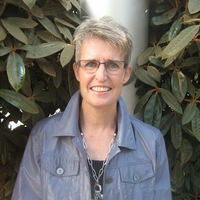 It is with great sadness that we learned of the passing of Dr. Joy Butler. She will be very much missed.
Dr. Butler was a Professor in the Dept of Curriculum and Pedagogy at UBC, Vancouver, Canada. She was coordinator of Health, Outdoor and Physical Education (HOPE) programs at the undergraduate and graduate levels as well as two-year M.Ed Cohorts for Health, Outdoor and Physical Experiential Education (HOPE-Ed). Born in the United Kingdom, Dr. Butler taught secondary school Physical Education there for ten years, as well as coaching three basketball teams to national finals.
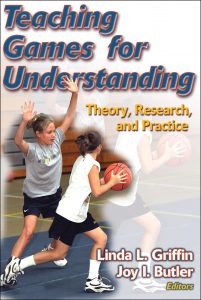
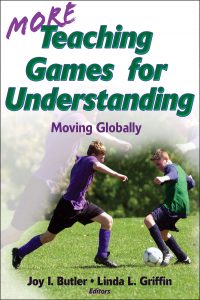
Joy’s research and teaching developed around constructivism, complexity thinking, situated ethics and community wellness. She was active in international scholarship, organization, and advocacy for TGfU. She founded and was Chair of the TGfU Task Force in 2002 and developed its evolution into the TGfU SIG in 2006. She directed the 1st and 4th International Teaching Games for Understanding (TGfU) Conferences in 2001 and 2008. She was invited to give presentations and workshops on TGfU in many different countries, including Finland, Singapore, Australia, Spain, Taiwan, Hong Kong, UK and Colombia. She created and Chaired the TGfU International Advisory Board comprising of 17 individual country representatives.
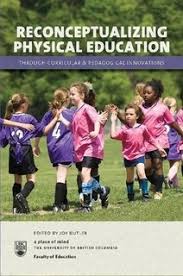
Joy edited or co-edited six TGfU books. Her authored book, ‘Using inventing games to prevent bullying, teach democracy and promote social justice,’ was published in 2016. Her research interests and international work have translated into the expansion of graduate and undergraduate PE programs at UBC. [biography adapted from https://edcp.educ.ubc.ca/faculty-staff/joy-butler]
Selected books available at Education Library:
|
Griffin, L. & Butler, J. (Eds.). (2005). Teaching games for understanding: Theory, Research and Practice, (pp. 1-238). Champaign, IL: Human Kinetics. GV361 .T34 2005, EDUCATION LIBRARY stacks |
Butler, J., Griffin, L. (2010). More Teaching Games for Understanding: Moving globally, (pp. 1-248). Champaign, IL: Human Kinetics. GV361 .M73 2010, EDUCATION LIBRARY stacks |
|
Butler, J. (Ed). (2015). Reconceptualizing physical education through curricular & pedagogical innovations (pp. 1–205). Morrisville, NC: Lulu Publishing GV342 .R435 2015 EDUCATION LIBRARY reserve
|
|
Makerspace Kit Bookings Available for Practicum
A selection of makerspace kits are available to be booked in advance so that students may plan to use them during their practicum visits. Students may reserve makerspace kits by following the instructions below. Please note that some of the kit components vary slightly. Be sure to review the components of the kit you are interested in booking.